Red Moon During Eclipse

Caleb Ryan
| 24-07-2026
 · Astronomy Team
Have you ever watched the Moon slowly darken before glowing with a remarkable red color?
A total lunar eclipse is one of the most captivating events in the night sky, offering a rare opportunity to observe the precise alignment of the Sun, Earth, and Moon.
Although the Moon appears dramatically different during the eclipse, its surface does not change. Instead, the striking red glow is created by the way sunlight travels through Earth's atmosphere before reaching the Moon, producing a breathtaking display that has fascinated skywatchers for generations.
How a Total Lunar Eclipse Happens
A total lunar eclipse occurs only during a full Moon, when the Sun, Earth, and Moon align in nearly a straight line. As Earth moves between the Sun and the Moon, it blocks direct sunlight and casts a large shadow into space.
Earth's shadow consists of two regions. The outer region, called the penumbra, produces a faint dimming that can be difficult to notice. The inner, darker region, known as the umbra, is where the most dramatic stage of the eclipse occurs. As the Moon moves completely into the umbra, it gradually takes on shades of red, orange, or copper instead of disappearing from view.
The entire event unfolds over several hours, allowing observers to watch the Moon slowly change in brightness and color before returning to its familiar appearance.

Why the Moon Turns Red
The Moon appears red because a small amount of sunlight continues to reach it even while Earth blocks the Sun's direct rays. Before arriving at the Moon, this light passes through Earth's atmosphere, where it is bent and filtered.
Sunlight contains all the colors of the visible spectrum. Shorter blue and violet wavelengths are scattered in many directions, while the longer red and orange wavelengths travel through the atmosphere more effectively.
The remaining red and orange light gently illuminates the Moon during totality, creating the distinctive reddish appearance that makes a total lunar eclipse so memorable.
How Earth's Atmosphere Shapes the View
Earth's atmosphere acts as a natural filter, bending sunlight around the edge of the planet before it reaches the Moon. This process, known as atmospheric refraction, allows a portion of sunlight to pass into Earth's shadow.
Because most shorter wavelengths are scattered before reaching the Moon, the remaining light is dominated by warmer colors. As a result, the Moon appears dimmer while displaying the rich red, orange, and copper tones associated with a total lunar eclipse.
Why Every Eclipse Looks Different
Although every total lunar eclipse follows the same fundamental process, no two appear exactly alike. Some display a bright orange glow, while others take on deep crimson or reddish-brown tones.
These differences are influenced by conditions in Earth's atmosphere. Dust, moisture, and tiny airborne particles affect how much sunlight reaches the Moon and how strongly different wavelengths are filtered. Because atmospheric conditions constantly change, each total lunar eclipse presents its own distinctive appearance.
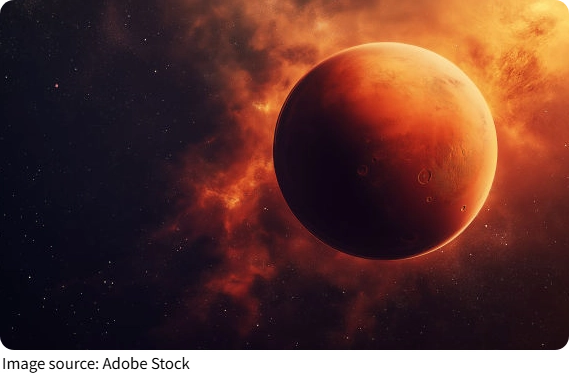
A Lasting Wonder
A total lunar eclipse is more than a spectacular astronomical event. It demonstrates how light, planetary motion, and Earth's atmosphere work together to create one of nature's most remarkable nighttime displays.
So, Lykkers, when the next total lunar eclipse appears, take a moment to look up and enjoy this extraordinary sight. Each eclipse offers a unique opportunity to witness the beauty of our cosmic neighborhood from a fresh perspective.