Panda Home Secret!

Mukesh Kumar
| 23-07-2026
 · Animal Team
Hello, Readers! Picture yourself walking through a forest where moss blankets ancient trees and dense bamboo creates quiet green pathways.
While the landscape may seem perfect everywhere, red pandas are surprisingly selective about where they live.
They depend on forests that provide the right mix of cool temperatures, safe shelter, and, above all, abundant bamboo throughout the year. Recent ecological research shows that bamboo is far more than a favorite food—it is the essential foundation that determines whether a forest can support a thriving red panda population.
A Specialist That Cannot Easily Adapt
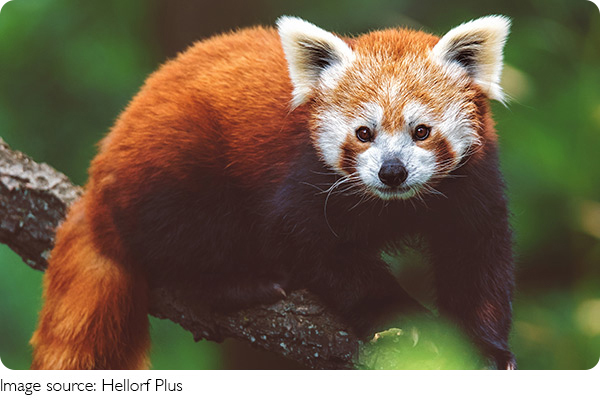
Unlike many mammals that can switch between different food sources when conditions change, the red panda has evolved into a dietary specialist. Although classified as a carnivore, its daily diet consists overwhelmingly of bamboo leaves and tender shoots.
This unusual feeding strategy presents a challenge because bamboo contains relatively little energy and is difficult to digest. To compensate, red pandas spend much of the day feeding and conserving energy. Their slow metabolism, extended resting periods, and careful movement through the forest all reflect an animal living on a low-calorie diet.
If bamboo becomes scarce, replacing it with other plants is not a realistic solution. Fruits, berries, insects, and small animals may occasionally supplement the diet, but they cannot provide enough nutrition to sustain wild populations throughout the year. This heavy dependence means that the availability of bamboo directly limits where red pandas can survive.
Searching for the Perfect Habitat
To better understand which forest features matter most, researchers led by Dr. Mahesh Kumar Bista examined red panda habitats.
Rather than focusing on a single forest, the team surveyed multiple landscapes with varying environmental conditions. Field surveys combined evidence of red panda presence—including direct observations, footprints, scratch marks, and droppings—with detailed measurements of habitat characteristics.
Scientists also evaluated environmental factors such as elevation, temperature, tree density, canopy cover, water sources, vegetation diversity, and bamboo abundance. Comparing these variables allowed researchers to determine which habitat features consistently appeared where red pandas were most common.
One Pattern Remained Consistent
Many environmental characteristics influenced red panda distribution, but their importance changed from one location to another. Some forests with taller trees supported red pandas, while others with shorter trees did as well.
Water availability was beneficial, yet not equally important in every study area. Tree density and overall plant diversity also showed inconsistent relationships with red panda abundance.
Bamboo, however, stood apart from every other factor. Across different forests and environmental conditions, areas with abundant bamboo consistently contained more evidence of red panda activity. Dense bamboo growth repeatedly matched locations where the animals chose to feed, travel, and rest. This consistency makes bamboo one of the strongest ecological indicators of suitable red panda habitat identified by the study.
More Than Food: Bamboo Is a Survival Tool
The relationship between red pandas and bamboo extends far beyond nutrition. Dense bamboo understories create natural escape routes from predators such as snow leopards and other carnivores. Red pandas are agile climbers, and bamboo provides a network of slender stems that larger predators cannot easily navigate. This structural complexity increases the chances of escaping danger without expending excessive energy.
Bamboo also helps regulate the forest environment. Thick vegetation retains moisture, creates cooler microclimates, and protects the forest floor from direct sunlight. These stable conditions are especially valuable for red pandas, which are adapted to cool mountain ecosystems and are sensitive to rising temperatures.
In addition, bamboo-rich forests often support suitable nesting and resting sites nearby. Red pandas commonly use tree hollows, branches, or sheltered locations close to reliable feeding areas, reducing the distance they must travel each day. Every advantage provided by bamboo helps conserve precious energy—an essential strategy for an animal living on a nutritionally limited diet.
Why Habitat Protection Must Be More Targeted
Conserving an endangered species often sounds straightforward: protect the forest. In reality, conservation resources are limited, making strategic decisions essential. If every hectare cannot receive the same level of protection, identifying the forests that provide the greatest ecological value becomes critical.
Research showing the importance of bamboo allows conservation organizations to prioritize habitats where protection or restoration will produce the greatest benefit. These findings also guide reforestation projects. Simply planting trees may not recreate suitable red panda habitat if bamboo is absent. Successful restoration requires rebuilding the entire ecological structure that supports feeding, shelter, and movement.
Furthermore, scientific evidence strengthens policies aimed at limiting deforestation. Conservation decisions backed by field data are generally more effective than those based on assumptions alone.
A Future Closely Tied to Bamboo Forests
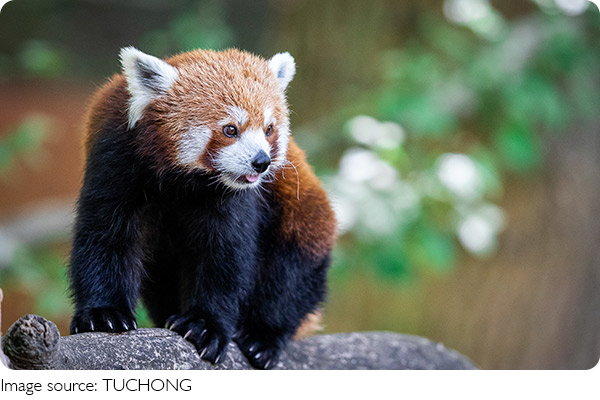
Red panda populations continue to face pressure from habitat fragmentation, expanding human activity, and climate change. Rising temperatures may gradually alter the mountain environments where bamboo grows best, potentially shrinking suitable habitat even further.
Because bamboo responds differently to changing climate conditions than many tree species, protecting existing bamboo forests has become increasingly important. Maintaining connected forest corridors can also help red pandas move between suitable habitats as environmental conditions shift over time.
Safeguarding bamboo therefore protects far more than a single plant. It preserves the ecological system that supports one of Asia's most distinctive mountain mammals.
The red panda's dependence on bamboo illustrates how closely a species can be connected to one element of its environment. While healthy forests require clean water, diverse vegetation, and stable climates, research consistently shows that abundant bamboo remains the defining feature of high-quality red panda habitat.